Table of Contents
ToggleEducation today techniques have shifted dramatically from traditional lectures and memorization. Teachers now use interactive tools, flexible formats, and data-driven approaches to reach students more effectively. These modern methods focus on engagement, critical thinking, and real-world application.
The classroom of 2025 looks nothing like it did a decade ago. Students collaborate on digital platforms, learn at their own pace through adaptive software, and tackle projects that mirror actual workplace challenges. This transformation isn’t just about adding technology, it’s about rethinking how people learn best.
This article explores the key education today techniques shaping modern classrooms. From technology-enhanced instruction to personalized learning paths, these methods are producing measurable results in student outcomes.
Key Takeaways
- Education today techniques prioritize student engagement, critical thinking, and real-world application over traditional lectures and memorization.
- Technology-enhanced learning—including VR, AR, and interactive platforms—extends education beyond physical classrooms and makes abstract concepts concrete.
- Student-centered methods like inquiry-based learning and Socratic seminars develop transferable critical thinking and communication skills.
- Project-based learning integrates multiple subjects through real-world challenges, preparing students for professional environments.
- Adaptive learning software personalizes instruction by adjusting difficulty based on individual student performance and identifying knowledge gaps.
- Collaborative education today techniques teach essential soft skills like communication, time management, and conflict resolution that employers value.
Technology-Enhanced Learning Approaches
Technology has become central to education today techniques across all grade levels. Digital tools extend learning beyond physical classrooms and create new opportunities for student engagement.
Interactive Digital Platforms
Learning management systems like Canvas and Google Classroom organize coursework, assignments, and communication in one place. Students access materials anytime, submit work digitally, and receive faster feedback from instructors.
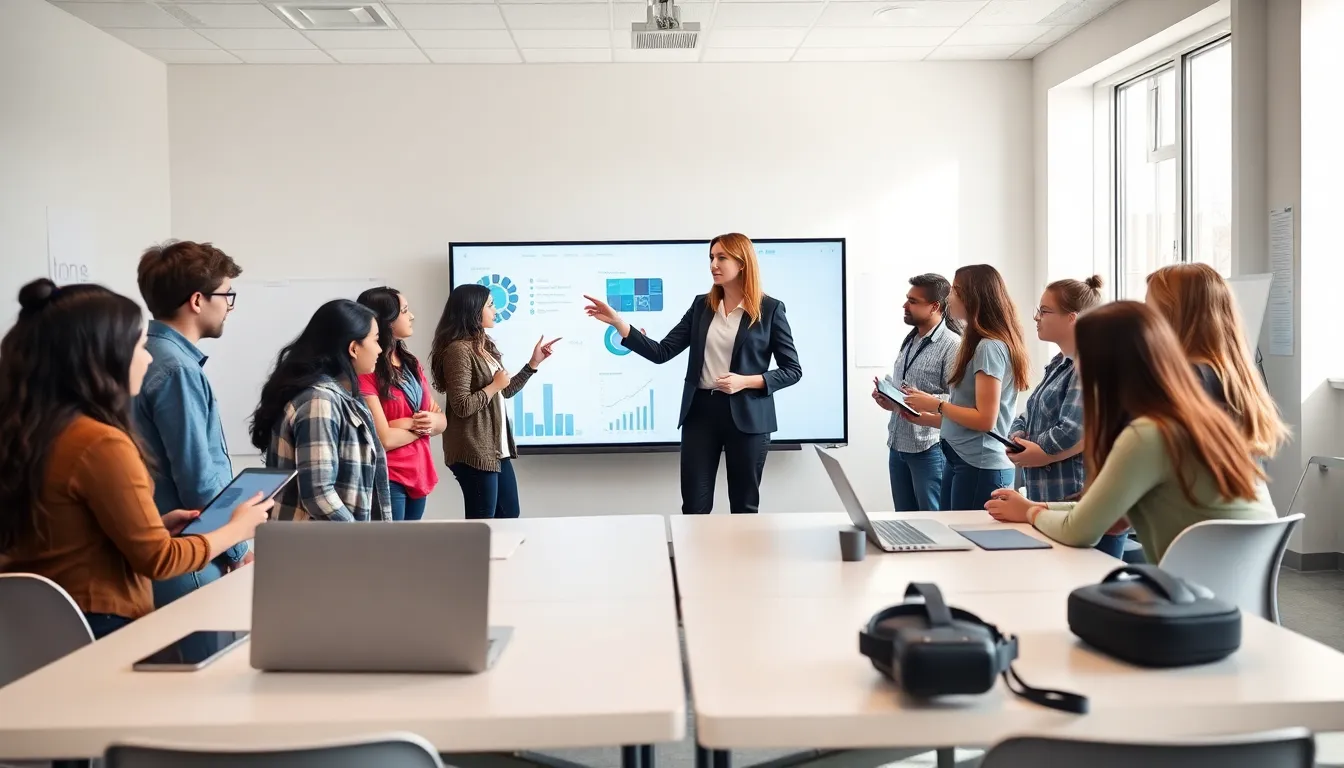
Interactive whiteboards and tablets replace static presentations with dynamic content. Teachers display videos, run simulations, and annotate lessons in real time. Students can interact directly with learning materials rather than passively watching.
Virtual and Augmented Reality
Virtual reality (VR) takes students inside historical events, scientific processes, and distant locations. A biology class can explore the human circulatory system from the inside. A history lesson can transport students to ancient Rome.
Augmented reality (AR) overlays digital information onto physical environments. Students point their devices at textbook images to see 3D models pop up. This technology makes abstract concepts concrete and memorable.
Video-Based Instruction
Flipped classrooms assign video lectures as assignments, freeing class time for discussion and hands-on activities. Students watch explanations at their own pace, rewinding difficult sections as needed.
Short-form educational videos on platforms like YouTube and Khan Academy supplement formal instruction. These resources help students review concepts independently and explore topics beyond the standard curriculum.
Education today techniques using technology require thoughtful implementation. The goal isn’t technology for its own sake, it’s using digital tools to improve actual learning outcomes.
Student-Centered Teaching Methods
Traditional education placed teachers at the center of every lesson. Modern education today techniques flip this model, putting students in active roles.
Inquiry-Based Learning
Inquiry-based approaches start with questions rather than answers. Teachers pose problems and guide students through investigation processes. Students form hypotheses, gather evidence, and draw conclusions independently.
This method develops critical thinking skills that transfer across subjects. A student who learns to investigate scientific questions applies the same reasoning to historical analysis or literary interpretation.
Discussion and Debate Formats
Socratic seminars replace lectures with structured discussions. Students prepare questions about texts or concepts, then explore ideas through dialogue with peers. The teacher facilitates but doesn’t dominate.
Debate activities require students to research positions, anticipate counterarguments, and articulate ideas clearly. These exercises build communication skills alongside content knowledge.
Choice and Voice
Student-centered classrooms offer choices in how students demonstrate learning. One student might write a research paper while another creates a video presentation or builds a physical model. Different formats let students play to their strengths.
Giving students voice in classroom decisions increases engagement. When learners help set goals or choose project topics, they invest more effort in the work.
Education today techniques that center students require teachers to shift from information delivery to coaching. This transition challenges some educators but produces more engaged, self-directed learners.
Collaborative and Project-Based Learning
Real-world work happens in teams. Education today techniques increasingly emphasize collaboration and extended projects that mirror professional environments.
Group Projects With Defined Roles
Effective group work assigns clear responsibilities to each team member. One student researches, another analyzes data, a third creates presentations. This structure prevents free-riding and teaches division of labor.
Teachers use peer evaluation tools to assess individual contributions within groups. Students rate teammates on effort, communication, and reliability. These assessments encourage accountability.
Project-Based Learning (PBL)
PBL structures entire units around complex, real-world problems. Students might design a sustainable community garden, create a marketing campaign for a local business, or develop an app to solve a community issue.
These projects integrate multiple subjects naturally. A community garden project involves biology, mathematics, economics, and communication skills. Learning becomes interconnected rather than siloed.
Cross-Classroom and Global Collaboration
Technology enables collaboration beyond single classrooms. Students partner with peers in other schools, states, or countries on shared projects. These connections expose learners to diverse perspectives and prepare them for global workplaces.
Video conferencing tools make international collaboration practical. A class in Texas can work with students in Japan on environmental research, comparing local ecosystems and sharing findings.
Education today techniques that emphasize collaboration teach soft skills, communication, conflict resolution, time management, that employers consistently rank as essential.
Personalized and Adaptive Learning Strategies
Every student learns differently. Education today techniques now accommodate individual differences through personalization and adaptive systems.
Differentiated Instruction
Differentiated instruction adjusts content, process, or products based on student readiness, interests, and learning profiles. A teacher might provide three versions of a reading assignment at different difficulty levels. All students work toward the same learning goals through different paths.
Flexible grouping changes student configurations based on specific activities. Students might work in mixed-ability groups for some tasks and skill-level groups for others.
Adaptive Learning Software
Adaptive platforms like DreamBox and IXL adjust difficulty automatically based on student performance. When a learner masters a concept, the software advances. When they struggle, it provides additional practice and alternative explanations.
These systems generate detailed data on student progress. Teachers see exactly which concepts each student has mastered and where gaps remain. This information guides targeted intervention.
Competency-Based Progression
Competency-based education lets students advance when they demonstrate mastery, regardless of time spent. Fast learners move ahead without waiting. Struggling students get additional time without falling permanently behind.
This approach requires clear learning objectives and valid assessments. Students know exactly what skills they need to demonstrate and can track their own progress toward mastery.
Learning Style Considerations
While the strict “learning styles” theory has faced criticism, teachers still recognize that students respond to different approaches. Some learners benefit from visual diagrams, others from verbal explanations, still others from hands-on manipulation.
Education today techniques offer multiple entry points to content. A single lesson might include reading, video, discussion, and physical activity, engaging different learners at different moments.