Table of Contents
ToggleEducation today examples show how classrooms have transformed dramatically from traditional lecture-based models. Students in 2025 learn through AI tutors, virtual reality field trips, and hands-on projects that mirror real-world challenges. Schools across the globe now prioritize emotional intelligence alongside academic achievement.
This shift reflects a fundamental change in what society expects from education. Employers want graduates who can think critically, collaborate effectively, and adapt quickly. Parents want their children engaged and motivated. Teachers want tools that help them reach every student.
The following sections explore four key approaches defining education today examples in practice. From technology-driven classrooms to social-emotional learning programs, these methods represent what works in modern schools.
Key Takeaways
- Education today examples include AI tutors, virtual reality experiences, and project-based learning that prepare students for real-world challenges.
- Personalized learning models allow students to progress at their own pace and choose pathways that match their learning style.
- Technology like AI-powered tutoring and cloud-based platforms has reduced teacher grading time by up to 40% while improving student feedback.
- Project-based and experiential learning connects classroom skills to authentic problems, making education more relevant and engaging.
- Social-emotional learning programs teach students emotional intelligence, mindfulness, and conflict resolution alongside academics.
- Modern education today examples prioritize critical thinking, collaboration, and adaptability—skills employers actively seek in graduates.
Technology-Driven Learning Environments
Technology has reshaped how students interact with information. Education today examples in this category include AI-powered tutoring systems, immersive simulations, and cloud-based collaboration tools.
Artificial Intelligence in Classrooms
AI tutoring platforms like Khanmigo and Century Tech analyze student responses in real time. These systems identify knowledge gaps and adjust lesson difficulty automatically. A student struggling with fractions receives additional practice problems. A student excelling moves forward without waiting for classmates.
Teachers use AI to grade assignments faster and provide detailed feedback. This frees up time for one-on-one instruction and mentoring. Schools in Arizona and Texas report that AI tools reduced grading time by 40% in pilot programs during 2024.
Virtual and Augmented Reality
VR headsets transport students to ancient Rome, the human bloodstream, or the surface of Mars. These immersive experiences create memorable learning moments that textbooks cannot replicate. A biology class might explore a 3D model of DNA rather than staring at a flat diagram.
Augmented reality adds digital information to physical spaces. Students point tablets at historical landmarks and see reconstructions of what buildings looked like centuries ago. AR apps turn math problems into interactive puzzles.
Cloud-Based Learning Platforms
Google Classroom, Microsoft Teams, and Canvas connect students and teachers regardless of location. Assignments submissions, grade tracking, and parent communication happen in one place. These platforms proved essential during pandemic-era remote learning and remain central to education today examples of flexible instruction.
Personalized and Adaptive Education Models
Not every student learns the same way or at the same pace. Personalized education recognizes this reality and builds systems around individual needs.
Competency-Based Progression
Traditional schools move students forward based on seat time. Competency-based education requires mastery before advancement. A student must demonstrate understanding of multiplication before moving to division. This approach prevents knowledge gaps that compound over years.
Schools in New Hampshire and Maine have implemented statewide competency-based frameworks. Early data suggests improved outcomes for students who previously fell behind in traditional models.
Learning Style Accommodations
Some students absorb information better through videos. Others prefer reading. Still others need hands-on manipulation of physical objects. Education today examples of personalization include offering multiple pathways to the same learning objective.
A lesson on the American Revolution might include:
- A documentary video
- Primary source documents
- An interactive timeline
- A debate simulation
Students choose their preferred entry point while all demonstrating the same core competencies.
Adaptive Software and Data Analytics
Modern educational software tracks thousands of data points per student. Algorithms detect patterns humans might miss. Perhaps a student performs worse on morning assessments or struggles with word problems containing specific vocabulary. Teachers receive actionable insights to address these specific challenges.
This data-driven approach represents a significant shift in education today examples. Decisions once based on intuition now rely on evidence.
Project-Based and Experiential Learning
Students remember what they do far better than what they hear. Project-based learning (PBL) puts students in active roles where they solve problems, create products, and present findings.
Real-World Problem Solving
A high school in California partners with local businesses to give students authentic challenges. A restaurant might ask students to redesign their menu for better nutrition. A nonprofit might request a marketing campaign. Students apply math, writing, and design skills to produce something useful.
These projects show students why their education matters. The question “when will I ever use this?” disappears when students see their work making real impact.
Maker Spaces and STEM Labs
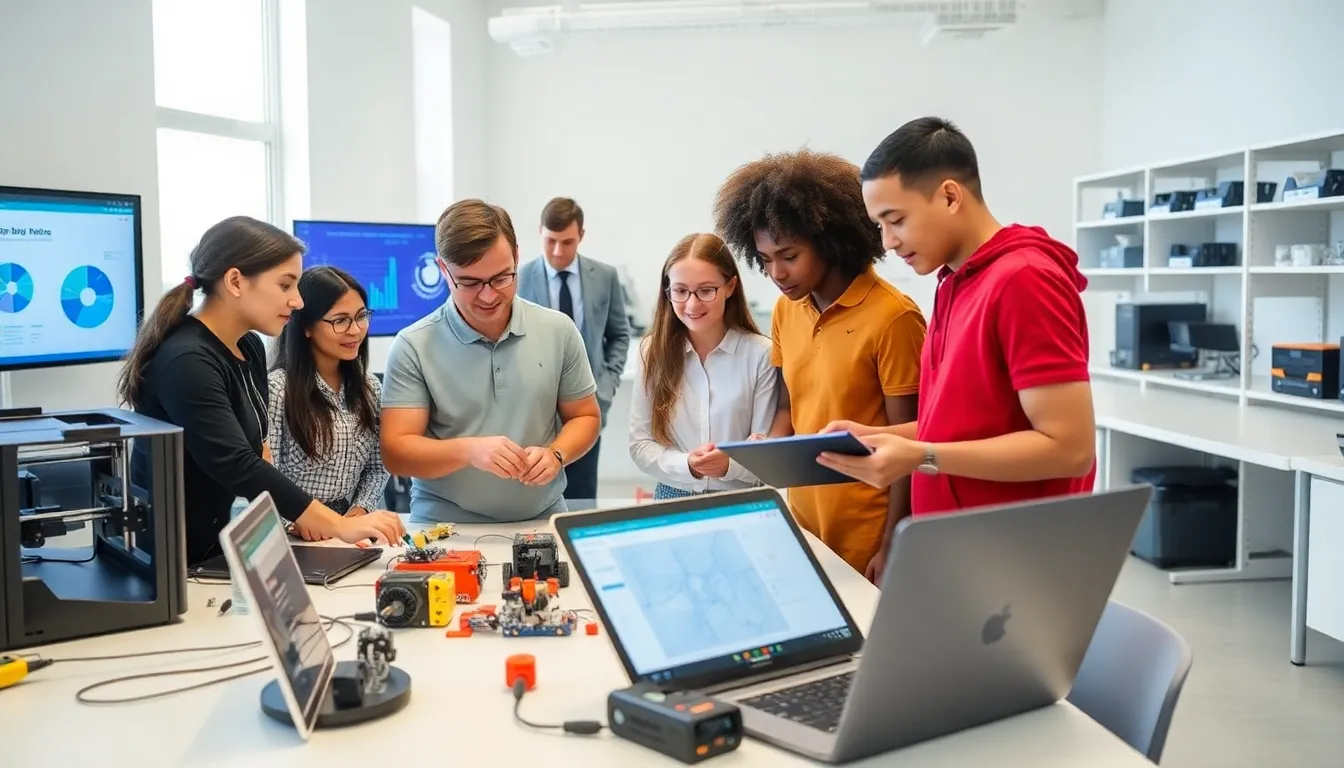
Many schools now feature dedicated spaces for building and experimenting. Students access 3D printers, laser cutters, robotics kits, and electronics components. They prototype inventions and iterate based on testing.
Education today examples in maker education include elementary students designing prosthetic hands and middle schoolers building weather stations. These hands-on experiences build confidence alongside technical skills.
Internships and Community Partnerships
High school internship programs connect classroom learning to career exploration. Students spend part of their week at hospitals, engineering firms, or media companies. They observe professionals and contribute to real projects.
Community partnerships extend learning beyond school walls. Environmental science classes might monitor local water quality. History classes might interview elderly residents and create oral history archives. These connections make education feel relevant and important.
Social-Emotional Learning in Schools
Academic knowledge means little without emotional intelligence and interpersonal skills. Social-emotional learning (SEL) programs teach students to manage emotions, build relationships, and make responsible decisions.
Explicit SEL Curriculum
Programs like CASEL’s framework provide structured lessons on self-awareness, self-management, social awareness, relationship skills, and responsible decision-making. Teachers guide discussions about emotions, conflict resolution, and empathy.
Education today examples of SEL integration include morning check-ins where students identify their emotional state. Some schools use visual mood meters. Others employ journaling exercises.
Restorative Practices
Traditional discipline focuses on punishment. Restorative practices focus on repair. When conflicts arise, students participate in facilitated conversations. They express how actions affected them and work together toward solutions.
Schools implementing restorative practices report fewer suspensions and improved school climate. Students learn accountability without experiencing exclusion from the learning community.
Mindfulness and Stress Management
Breathing exercises, meditation, and yoga have entered mainstream education. Students learn techniques to calm anxiety before tests or manage frustration during challenging assignments. Research links mindfulness practices to improved attention and reduced behavioral issues.
These education today examples recognize that student wellbeing directly affects academic performance. A stressed or anxious student cannot learn effectively regardless of curriculum quality.